Position:Professor
Degree: Doctoral Degree
Research Interests
My research focuses on computational structural engineering, with particular emphasis on advanced nonlinear finite-element analysis, the numerical simulation of reinforced concrete structures, and the development of innovative computational methods for structural analysis and design.
My work integrates computational mechanics, advanced numerical algorithms, high-performance computing and artificial intelligence to improve the accuracy, efficiency and accessibility of structural engineering simulations.
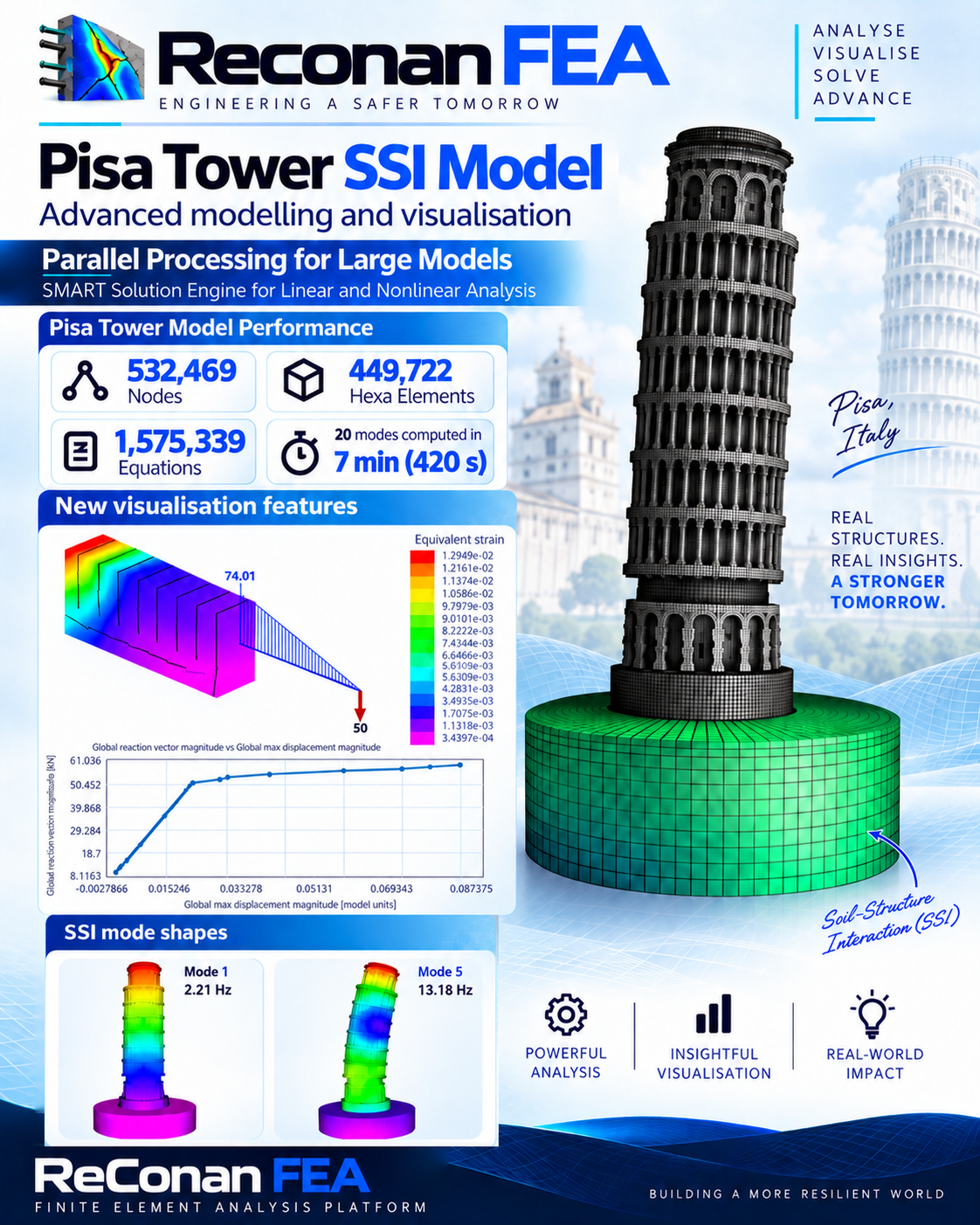
Figure 1. ReConAn FEA: Numerical modelling and high-performance analysis of the Leaning Tower of Pisa, including soil-structure interaction.
Principal Research Areas
1. Nonlinear Finite-Element Analysis: Development of advanced numerical formulations, constitutive models and solution algorithms for simulating the nonlinear behaviour of structures and materials.
2. Reinforced Concrete Structures: Detailed numerical investigation of reinforced concrete members and structural systems, including cracking, crushing, reinforcement yielding, bond behaviour and progressive failure.
3. Earthquake Engineering and Structural Performance: Nonlinear static and dynamic analysis, seismic assessment, structural resilience and performance-based evaluation of buildings and infrastructure.
4. Computational Mechanics and Numerical Methods: Development and implementation of finite-element formulations, nonlinear solution procedures and efficient numerical techniques.
5. Artificial Intelligence in Structural Engineering: Application of machine learning, surrogate modelling and data-driven computational techniques to structural prediction, analysis and optimisation.
6. Structural Health Monitoring and Digital Twins: Integration of numerical simulation, monitoring data and intelligent computational models for assessing and predicting structural performance.
7. High-Performance Scientific Computing: Parallel computing, numerical optimisation and computational acceleration for large-scale nonlinear structural simulations.
8. Structural Assessment and Strengthening: Numerical evaluation of existing structures, damage mechanisms, rehabilitation strategies and strengthening techniques.
9. Engineering Software Development: Design and development of specialised scientific software, including ReConAn FEA, for advanced nonlinear analysis of reinforced concrete structures.
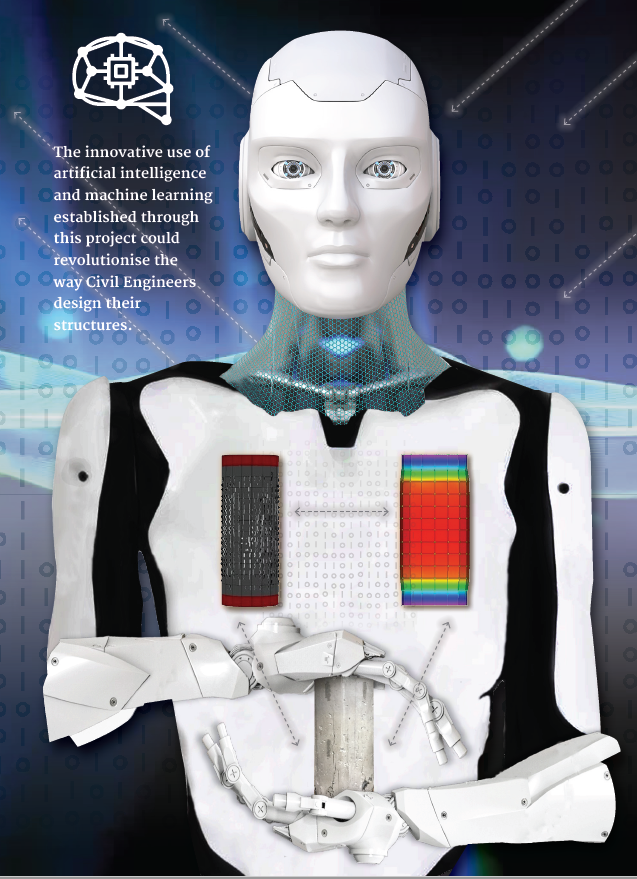
Artificial Intelligence for Reinforced Concrete Strength Prediction
Research by George Markou and Nikolaos P. Bakas exploring the development of artificial intelligence models trained using computationally generated finite-element data to predict the strength and structural performance of reinforced concrete members.
Research Demonstration Videos:
Prof George Markou YouTube Channel
