Position:Professor
Degree: Doctoral Degree
Research Projects
My research projects focus on the development of advanced computational methodologies, artificial intelligence approaches and high-performance simulation tools for next-generation structural engineering applications. The research integrates computational mechanics, nonlinear finite-element analysis, scientific computing and data-driven approaches to improve the analysis, design and assessment of complex engineering systems.
1. High-Performance Nonlinear Finite-Element Analysis of Reinforced Concrete Structures
Development of advanced computational methodologies for the simulation of reinforced concrete structures using detailed three-dimensional nonlinear finite-element models. The research focuses on predicting structural behaviour under extreme loading conditions, including cracking, crushing, reinforcement yielding, damage evolution and failure mechanisms.
Key topics: Nonlinear finite-element modelling; reinforced concrete constitutive models; structural failure analysis; large-scale numerical simulations.
2. ReConAn FEA: Advanced Computational Platform for Structural Engineering
Development of ReConAn FEA, a specialised finite-element analysis platform for advanced structural simulations. The software integrates nonlinear analysis algorithms, computational mechanics formulations and high-performance computing techniques for efficient analysis of complex engineering problems.
Key topics: Scientific software development; computational mechanics; parallel processing; large-scale finite-element simulations.
3. Artificial Intelligence and Machine Learning for Structural Engineering
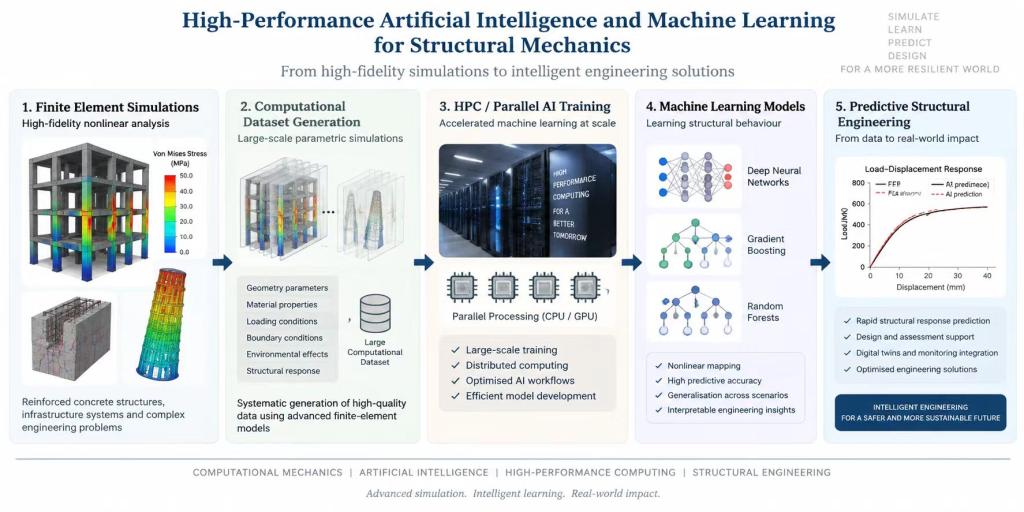
Development of artificial intelligence models using computationally generated datasets obtained from high-fidelity finite-element simulations. The research aims to establish predictive models and efficient design methodologies for reinforced concrete structures.
Key topics: Machine learning; synthetic data generation; predictive structural models; AI-assisted engineering design.
4. Soil–Structure Interaction and Large-Scale Infrastructure Analysis
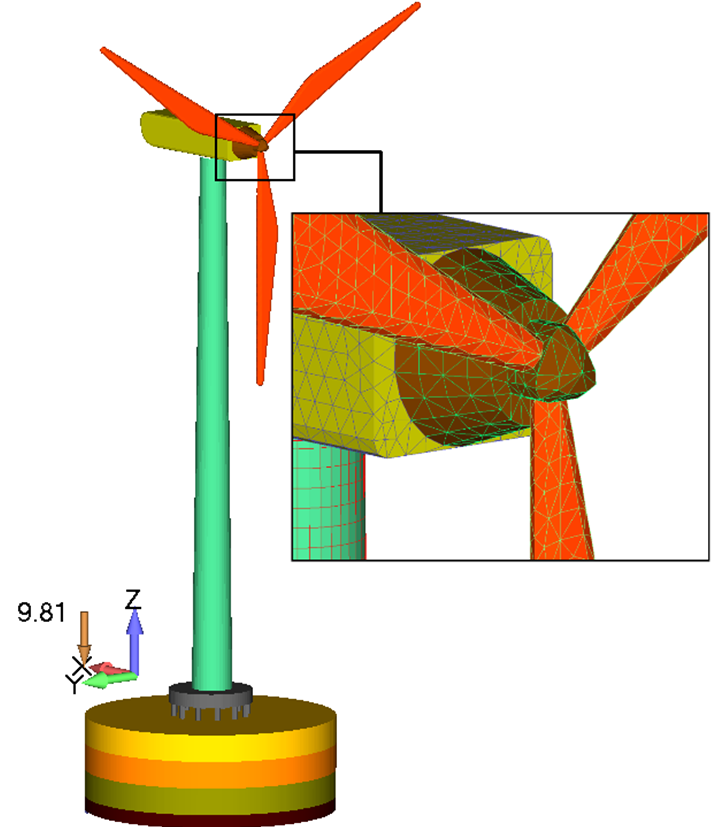
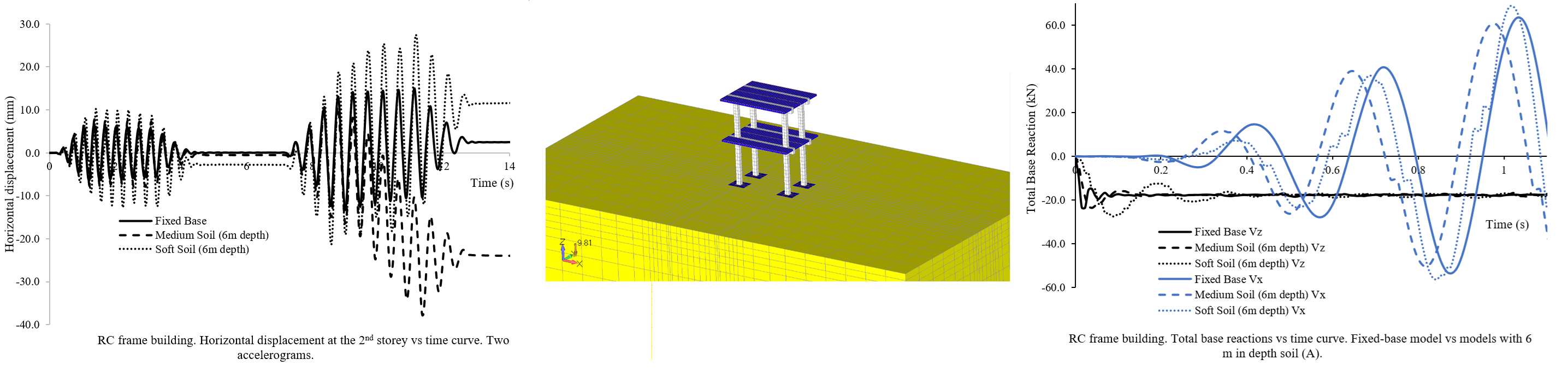
Advanced numerical investigation of the interaction between structures and their surrounding soil environment. The research includes high-performance simulations of foundations, buildings and infrastructure systems subjected to static, dynamic and seismic loading.
Key topics: Soil–structure interaction; dynamic analysis; infrastructure resilience; high-performance simulations.
5. Seismic Assessment, Retrofitting and Structural Resilience
Development of numerical methodologies for evaluating existing reinforced concrete structures and designing effective strengthening strategies. The research focuses on improving the safety and resilience of structures subjected to earthquake and extreme loading conditions.
Key topics: Seismic assessment; structural rehabilitation; strengthening techniques; performance-based engineering.

6. AI-Generated Computational Data for Next-Generation Engineering Design
Development of large-scale computational datasets generated through advanced numerical simulations for training artificial intelligence algorithms. The objective is to create efficient predictive tools capable of accelerating structural design and assessment.
Key topics: High-performance computing; computational datasets; artificial intelligence; digital engineering workflows.
Selected Funded Research Projects
The following projects represent selected research activities demonstrating international collaboration, computational research leadership and the development of advanced numerical and artificial intelligence methods for structural engineering applications.
1. MASTER — Mastering the Computational Challenges in Numerical Modelling and Optimum Design of CNT Reinforced Composites
European Research Council (ERC), FP7 Programme (2012–2018). Research focused on advanced computational modelling of composite materials and dynamic analysis of complex engineering systems.
2. Development of Fragility Curves for Reinforced Concrete Structures in Cyprus
Research project focusing on seismic vulnerability assessment and probabilistic evaluation of reinforced concrete structures.
3. Reinforced Concrete Modelling and Design — Developing the State-of-the-Art
Research project focused on advanced numerical modelling approaches and improved computational methods for reinforced concrete structures.
4. SMART R-INFRASTRUCTURE
Research project focusing on intelligent structural infrastructure assessment and advanced computational approaches for resilient engineering systems.
5. Development of Design Formulae for Reinforced Concrete Structures through Large-Scale Simulations and Artificial Intelligence Algorithms
EuroCC Project. Development of AI-based prediction methodologies using large-scale finite-element simulations and high-performance computing resources.
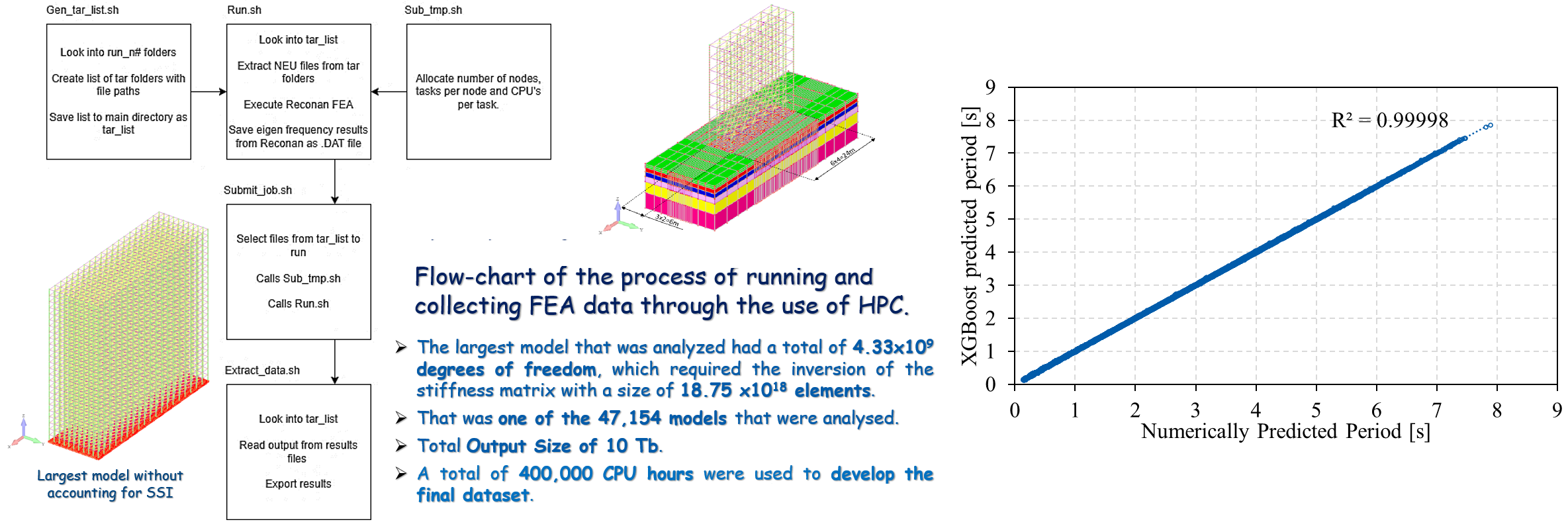
6. Development of Fundamental Period Formulae through Deep Learning Artificial Intelligence Considering Soil–Structure Interaction Effects
EuroCC Production Project. Development of deep learning models for predicting structural dynamic characteristics considering soil–structure interaction effects.
7. Development of Predictive Models for the Mechanical Response of Structures through Artificial Intelligence and Machine Learning Algorithms
EuroCC2 Project. Development of machine learning-based predictive models for structural engineering applications.
8. Development of Large Finite-Element Generated Datasets for Training AI and Machine Learning Algorithms in Civil Engineering
EuroHPC PRACE LUMI Project. Generation of large-scale computational datasets using high-performance computing for training advanced AI models in civil engineering.
