Position:Associate professor
Degree: Doctor
Teaching and Research Training
Courses connect fundamental theory with computable, testable, and verifiable engineering methods, preparing students to move from physical mechanisms and modelling to experiments and engineering judgement.
Undergraduate Courses
Seismic Design of Building Structures
High-Rise Building Structures
Seismic Isolation and Vibration Mitigation of Buildings
Intermediate Practice in the Field (Future Technology Program: Engineering Internet)
Graduate Courses
Structural Dynamics
Structural Vibration Control
Training integrates physical mechanisms, dynamic modelling, numerical algorithms, experimental validation, and engineering case studies, helping students develop the ability to define problems, verify solutions, and communicate technical results.
Course Development and Training Approach
Structural Vibration Control has been selected for Tongji University's Graduate Excellent Online Course Development Program, together with the development of a graduate-level textbook. The course integrates structural dynamics, seismic isolation and vibration mitigation, inerter systems, intelligent materials, optimisation algorithms, and engineering case studies.
Training approach: Training connects theoretical derivation, program implementation, device development, experiments, engineering judgement, and academic communication.
Learning outcome: Students learn to identify real engineering problems, build appropriate models, select control strategies, verify them through computation or experiments, and clearly explain their conditions of applicability and technical boundaries.
Team Training and Student Development
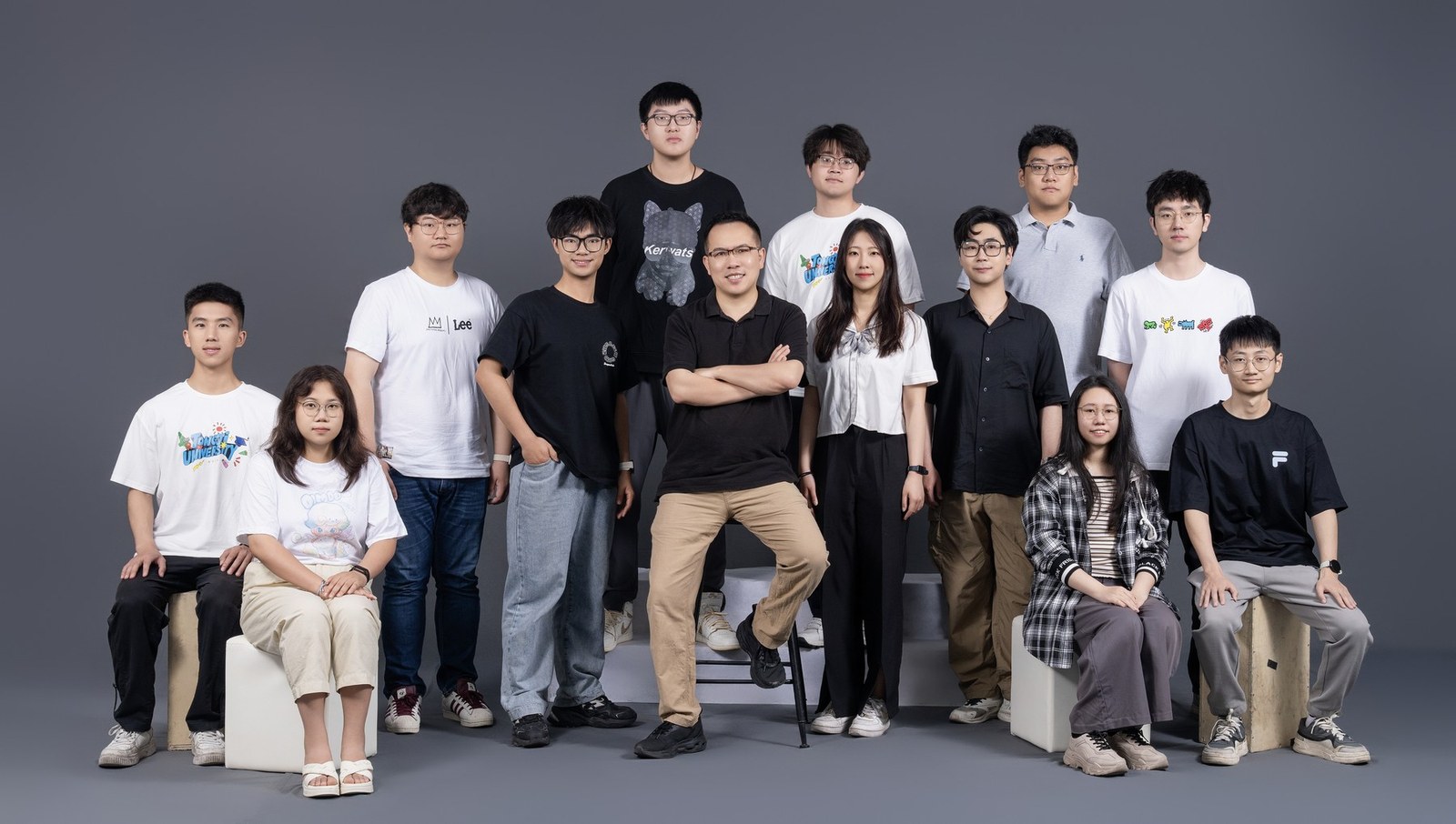
The group brings together master's students, doctoral students, and postdoctoral researchers working on inerter systems, structural vibration control, advanced damping materials and metamaterials, structural health monitoring, intelligent optimisation, and the seismic resilience of energy infrastructure.
Research training: Students progress from problem definition, literature analysis, and dynamic modelling to MATLAB/Python development, device prototyping, experiments, data analysis, engineering verification, and the communication of papers, patents, software, and technical reports.
Training record (as of March 2026): Over the past five years, the group has graduated 3 doctoral and 10 master's students. It currently supervises 4 doctoral and 10 master's students. Team members have received 6 National Scholarships, 2 Shanghai Outstanding Graduate awards, and 2 Tongji University Outstanding Doctoral Dissertation awards.
Graduate development: Graduate pathways include technology and artificial-intelligence companies such as Huawei and Microsoft, energy organisations, public-sector organisations and research institutes, universities, financial institutions, and further study in the United States and Japan.
The group values regular meetings, milestone management, detailed research feedback, and collaboration on engineering projects. Students with interests in mechanics, civil engineering, mechanical engineering, control, computation, and intelligent algorithms are welcome to contact the group.