Position:Associate professor
Degree: Doctor
From Fixed Mass to Designable Inertia
Our research develops lightweight, efficient, and verifiable dynamic design methods for structures, equipment, and energy infrastructure. In the past, inertia was primarily determined by how much an object weighed; with inerter-based systems, inertia can also be engineered through how a device is designed and connected.
Original Value | Making inertia a designable engineering resource for structures and equipment
The objective is not only to reduce vibration, but also to redesign inertia, dynamic transmission, and energy utilisation.
| Theoretical Value | An inerter produces a real interaction force between two terminals in response to their relative acceleration. This turns inertia from an attribute tied to physical mass into an independently designable and connectable fundamental dynamic element, extending the classical m–c–k system to an m–c–k–b network. |
| Engineering Value | A strong inertial effect can be obtained without adding an equivalent amount of physical mass. This enhances energy dissipation, improves low-frequency control, and reduces added mass in wind turbine towers, subway environments, liquid-storage tanks, industrial equipment, and existing structures. |
| Beyond Vibration Control | Real inertial force and networked inerter design can also support vibration-energy harvesting and generation, mechanical metamaterials and wave control, vehicle suspensions, robotics, precision equipment, and electromechanical systems. |
Original research pathway: real inertial force → damping enhancement → m–c–k–b coordination → dynamic negative-stiffness coordination → lightweight engineering control
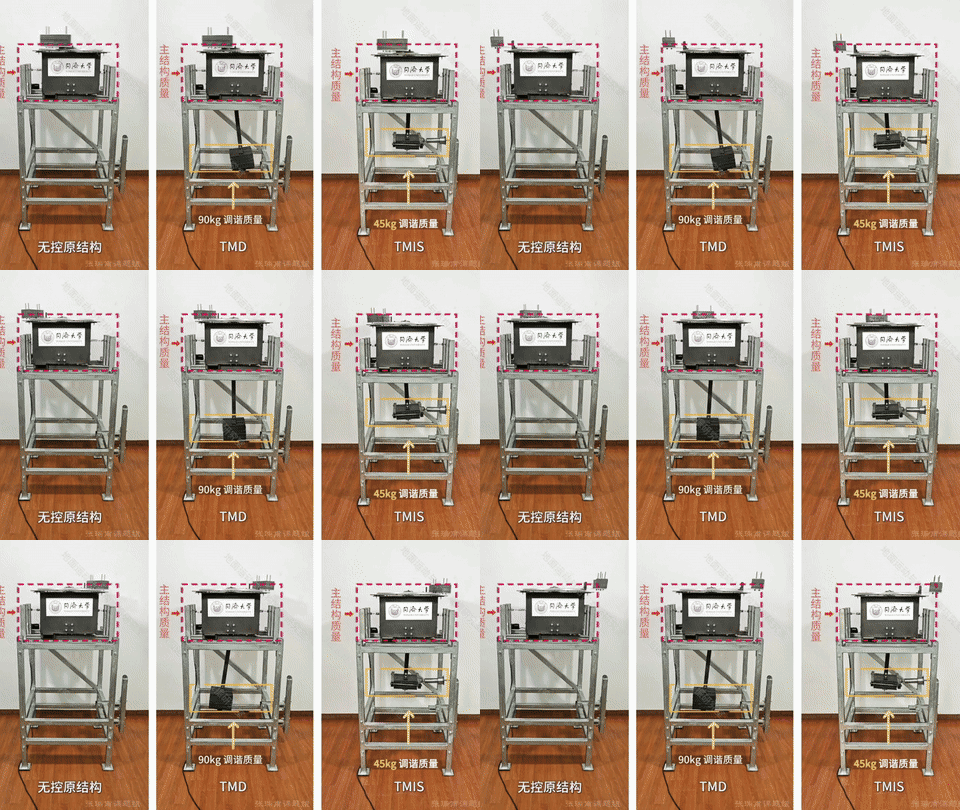
Lightweight tuned vibration control: 45 kg TMIS versus a 90 kg conventional TMD
The animation compares the uncontrolled structure, a 90 kg conventional TMD, and a 45 kg tuned mass inerter system, illustrating the potential of inerter technology to reduce the required tuning mass.
Main Research Directions
Inerter systems and high-performance vibration-control devices: real inertial force, mass replacement by inertance, damping enhancement, m–c–k–b coordination, dynamic negative stiffness, device configurations, and performance-based design.
Seismic isolation, vibration mitigation, and structural control: dynamic-response analysis, control-system design, and experimental validation for complex structures.
Wind energy and urban/subway vibration: monitoring, propagation analysis, prediction, and mitigation for wind turbine towers, subway operation, and urban construction.
Advanced damping materials and vibration-control metamaterials: high-damping materials, composite components, and material–structure integration.
Monitoring, intelligent optimisation, and digital assessment: connecting structures, equipment, monitoring data, and computational models through the Engineering Internet for state identification, parameter optimisation, and performance assessment.
Safety and resilience of energy and critical infrastructure: large liquid-storage tanks, offshore wind towers, industrial equipment, and other complex structures.
| For Students Training spans physical mechanisms, modelling, coding, device development, experiments, data analysis, and engineering verification. |
For Industry The group supports vibration diagnosis, solution design, prototype development, testing, and performance verification under clearly defined operating conditions and deliverables. |
Representative Research and Engineering Projects
Our projects connect fundamental dynamics, device development, experimental validation, and engineering assessment to address vibration and resilience challenges in energy infrastructure, urban environments, and complex structures.
| Project focus | Engineering question and research scope |
| Adaptive inerter isolation for large energy-storage tanks NSFC General Project, 2025–2028 |
Fluid–structure–inerter modelling, parameter coordination, device design, and experimental verification under complex seismic excitation. |
| Adaptive tuned-liquid inerters for offshore wind towers Shanghai international cooperation project, 2023–2026 |
Coupled wind–earthquake response, lightweight tuned-liquid inerter design, simulation, and performance assessment. |
| High-performance inerter systems and structural vibration control National key R&D international cooperation |
Damping-enhancement mechanisms, high-performance devices, transferable design methods, and structural-control experiments. |
| Urban and subway vibration control | Field monitoring, vibration-propagation analysis, prediction, and mitigation for neighbouring buildings, precision equipment, and human comfort. |
| High-damping materials and vibration-control metamaterials | Material design, dynamic characterisation, mechanical modelling, component integration, and engineering validation. |
| Large LNG membrane-tank shake-table testing | Shake-table testing, instrumentation, signal processing, model updating, safety assessment, and seismic/isolation performance verification for a 300,000 m³ LNG membrane tank. |
From prototypes to experiments and engineering deployment
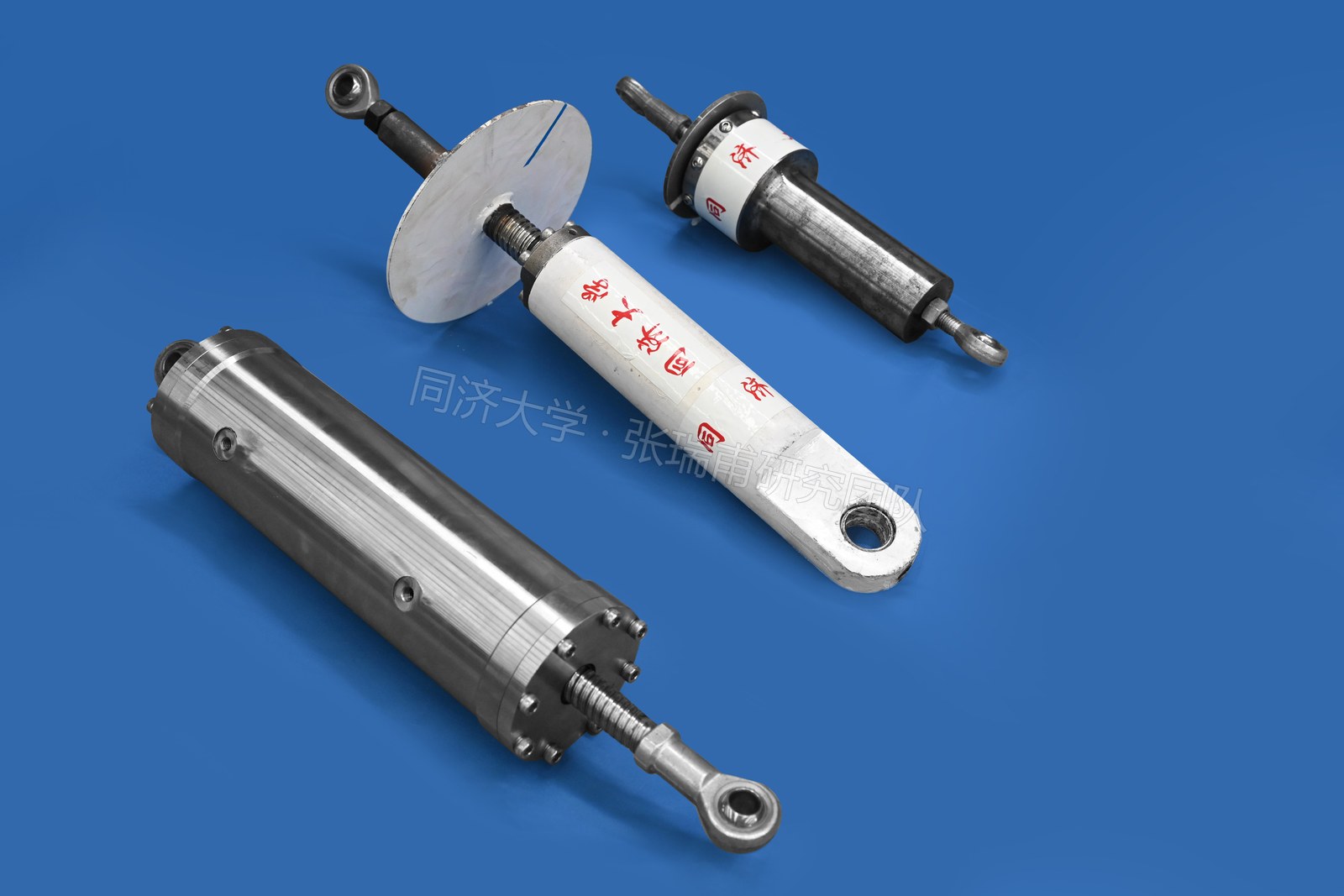
High-inertance inerter prototypes
Device development for different installation spaces, load levels, and control requirements.
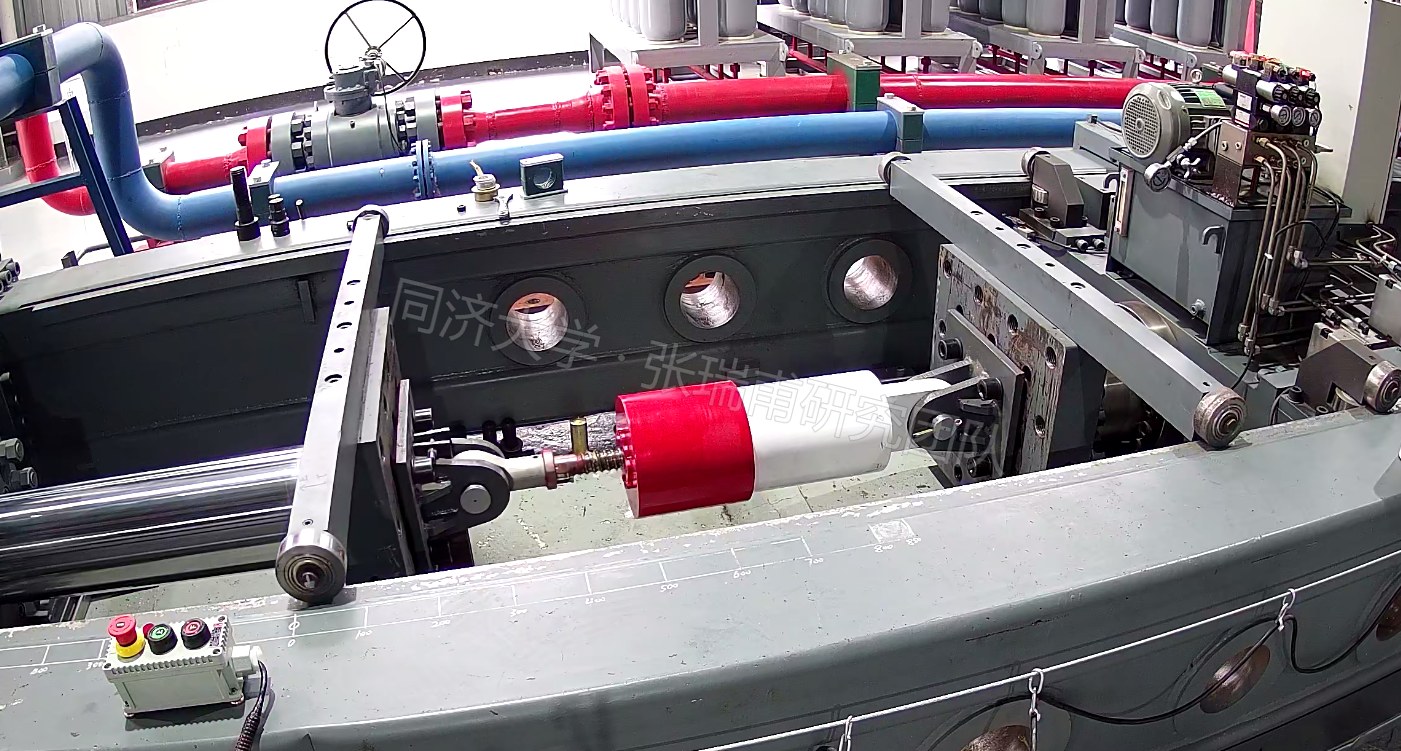
Large-capacity inerter testing
Load-capacity and dynamic-performance verification for large structures and energy infrastructure.
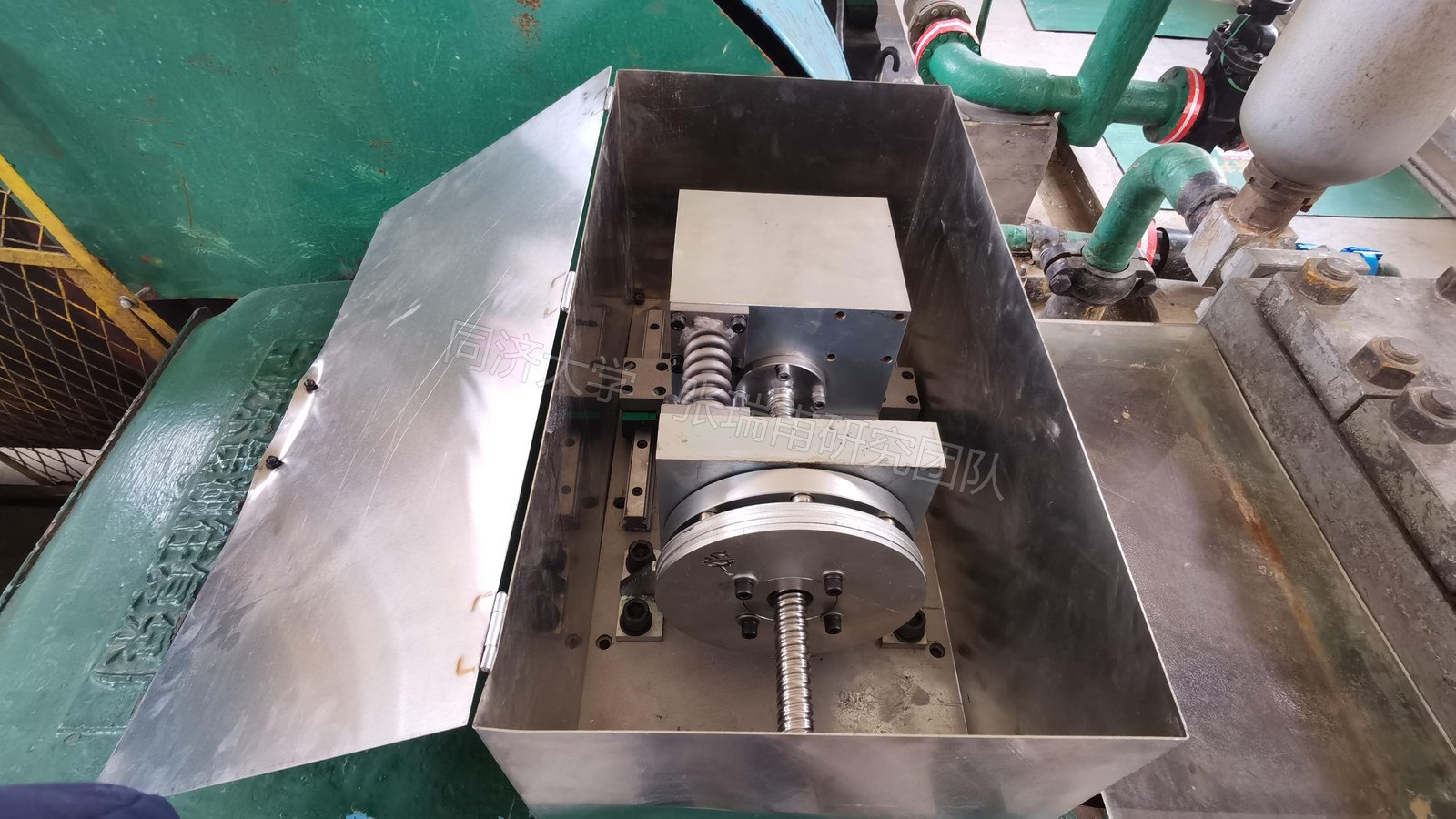
Industrial pump-station vibration-control application
On-site device integration and vibration-mitigation verification for rotating equipment and piping systems.
Collaboration: Engineering partners may work with the group on field testing, vibration diagnosis, scheme comparison, material and device development, experimental verification, and performance assessment.
Selected Publications
The group has published 133 peer-reviewed journal articles in Chinese and English. Seven papers have been recognised as highly cited—five through Essential Science Indicators (ESI) and two by Chinese journals. The selections below highlight recent advances, foundational contributions, and highly cited studies.
Recent Publications
Ruifu Zhang, Qian Tao, Zhipeng Zhao, Wentao Wang, Xilin Lu. Anti-slosh design and experimental investigation of liquid storage tank with a non-intrusive isolation system. Structures, 87 (2026), 111656. DOI
Ruifu Zhang, Luqi Zhang, Yuying Xia, Chao Pan, Zhipeng Zhao. Experimental Assessment of a Lightweight Tuned Mass Inerter System for Structural Vibration Control. Journal of Structural Engineering, 152(6) (2026), 04026058. DOI
Li Zhang, Songtao Xue, Tianli Chen, Liyu Xie, Ruifu Zhang, Zijian Yang. Performance assessment of crank inerters integrated into base-isolated structures for multi-level seismic protection. Engineering Structures, 357 (2026), 122490. DOI
Li Zhang, Ruifu Zhang, Yuying Xia, Zhipeng Zhao. A lightweight pendulum tuned mass inerter system for enhanced vibration control. Engineering Structures, 338 (2025), 120555. DOI
Ruifu Zhang, Qian Tao, Lihao Chen, Songhe Liu, Chao Pan. Inerter-Based Solution to Vibration Mitigation Against Structural Eccentricity. Journal of Earthquake Engineering, 29(10) (2025), 2126-2147. DOI
Chunfeng Wan, Puyu Li, Jiale Hou, Wenlong Zhao, Liyu Xie, Ruifu Zhang, Changqing Miao, Songtao Xue. Digital modeling of vortex-induced vibration of main girder of a large-span suspension bridge based on deep learning. Structures, 82 (2025), 110494. DOI
Ruifu Zhang, Minjun Wu, Zhipeng Zhao, Yuanchen Tang. Structural state nonlinearity-based design and modification formulae of inerter-based systems. Soil Dynamics and Earthquake Engineering, 187 (2024), 108946. DOI
Foundational and Highly Cited Papers
Citation counts are from a Web of Science report dated 23 March 2026 (Core Collection citations / total citations).
Seismic response mitigation of a wind turbine tower using a tuned parallel inerter mass system. Engineering Structures (2019). 245 / 265 citations. DOI
Damping enhancement principle of inerter system. Structural Control and Health Monitoring (2020). 182 / 209 citations. DOI
Demand-based optimal design of oscillator with parallel-layout viscous inerter damper. Structural Control and Health Monitoring (2018). 163 / 177 citations. DOI
Design of structure with inerter system based on stochastic response mitigation ratio. Structural Control and Health Monitoring (2018). 142 / 164 citations. DOI
Seismic response mitigation of structures with a friction pendulum inerter system. Engineering Structures (2019). 130 / 142 citations. DOI
A tuned liquid inerter system for vibration control. International Journal of Mechanical Sciences (2019). 124 / 131 citations. DOI
Optimal design and seismic performance of tuned fluid inerter applied to structures with friction isolators. Soil Dynamics and Earthquake Engineering (2020). 121 / 126 citations. DOI
Optimal design based on analytical solution for storage tank with inerter isolation system. Soil Dynamics and Earthquake Engineering (2020). 101 / 102 citations. DOI
Selected Chinese-Language Publications
Ruifu Zhang, Minjun Wu, Chao Pan. Discussion on Basic Concepts and Design Paradigm of Inerter-Based Vibration Mitigation Systems. Journal of Vibration Engineering, 2024. DOI
Ruifu Zhang, Yanru Cao, Chao Pan, Xiuyan Hu. Lightweight Structural Control Based on Tuned Mass Inerter System (TMIS) under Typical Excitation. Engineering Mechanics, 2022. DOI
Chao Pan, Yuan Liu, Ruifu Zhang, Jingzhou Lu. Performance-Cost Design Method of Inerter System Based on Closed-Form Formulae. Journal of Building Structures, 2022. DOI
Chao Pan, Xiao Han, Ruifu Zhang, Jingzhou Lu. Closed-Form Design Formula for Inerter System Based on the Principle of Maximum Damping Enhancement. Engineering Mechanics, 2023. DOI
Ruifu Zhang, Luqi Zhang, Chao Pan, Qingjun Chen. Multi-Objective Control Effect of Inerter System with Nonlinear Viscous Damping Considering Functionality of Buildings. Advanced Engineering Sciences, 2023. DOI
Chao Pan, Mingyue Jiang, Ruifu Zhang, Jingzhou Lu. Velocity Minimization Principle for Design of Inerter System. Journal of Vibration Engineering, 2026. DOI
Invention Patents and Engineering Translation
The patent portfolio covers inerter devices, vibration-control systems, isolation and energy-dissipation technologies, and engineering testing methods. The group currently holds 30 granted invention patents.
| Representative granted patent | A spatial-cam inerter — Chinese invention patent No. ZL202110259773.1 |
| Engineering relevance | Compact inerter devices and system-level solutions for lightweight vibration control, damping enhancement, and engineering implementation. |
The granted patent portfolio illustrates how the group's research progresses from dynamic principles to compact devices and engineering-ready vibration-control systems.
Representative Research Outcomes and Technology Development
This section highlights representative publications, patents, energy-utilisation demonstrations, software, standards, and engineering tools arising from the group's theoretical and engineering research.
Representative Publications and Patents
The publications, DOIs, and granted patent below trace the development from original theory and design methods to device implementation.
| Year | Representative contribution | Representative publication or patent |
| 2018 | Demand-oriented design of structures with inerter systems | Structural Control and Health Monitoring 10.1002/stc.2051 |
| 2019 | Lightweight tuned parallel inerter mass system for wind turbine towers | Engineering Structures 10.1016/j.engstruct.2018.11.020 |
| 2020 | Damping-enhancement principle of inerter systems | Structural Control and Health Monitoring 10.1002/stc.2523 |
| 2021 | Targeted vibration-control principle | International Journal of Mechanical Sciences 10.1016/j.ijmecsci.2021.106636 |
| 2021 | Ungrounded tuned mass inerter system (TMIS) | Wind and Structures 10.12989/was.2021.32.6.573 |
| 2024 | Real inertial force and the vibration-control design paradigm | Journal of Vibration Engineering 10.16385/j.cnki.issn.1004-4523.2024.11.006 |
| 2025 | Lightweight pendulum tuned mass inerter system | Engineering Structures 10.1016/j.engstruct.2025.120555 |
| Granted invention patents | 30 granted invention patents. Representative patent: A spatial-cam inerter, No. ZL202110259773.1. |
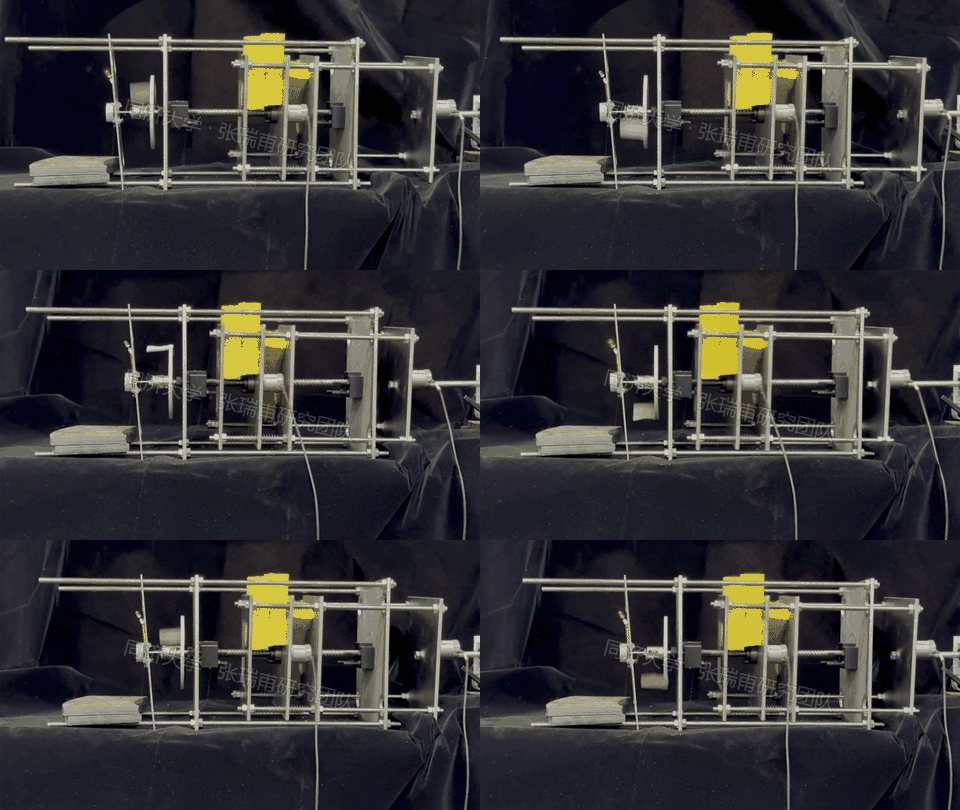
Inerter-Based Energy Generation and Vibration-Energy Utilisation
The group explores vibration-energy capture and electrical conversion based on inerter technology, extending designable inertia beyond vibration mitigation toward self-powered monitoring and low-power sensing.
Software, Standards, and Engineering Tools
The group translates theory and algorithms into reusable engineering tools for structural analysis, parameter optimisation, signal processing, and model conversion. The portfolio also includes seven standards as of March 2026.
INERTER: dynamic analysis of multi-degree-of-freedom structures with inerter systems
EQSignal: earthquake-motion signal processing and analysis
SAP2000–OpenSees structural-model conversion
Parameter optimisation and analysis of impact energy-dissipation inerter systems
Optimisation of inerter systems considering soil–structure interaction
These tools support research computation, scheme comparison, experimental data processing, and engineering performance assessment.
